

Gratitude is wanting less—and finding more—in what you already have.
Or why peace doesn’t arrive with the next upgrade

There’s a phrase that keeps tugging at me lately:
Gratitude begins when wanting ends.
Not when striving ends.
Not when growing ends.
Not when ambition disappears.
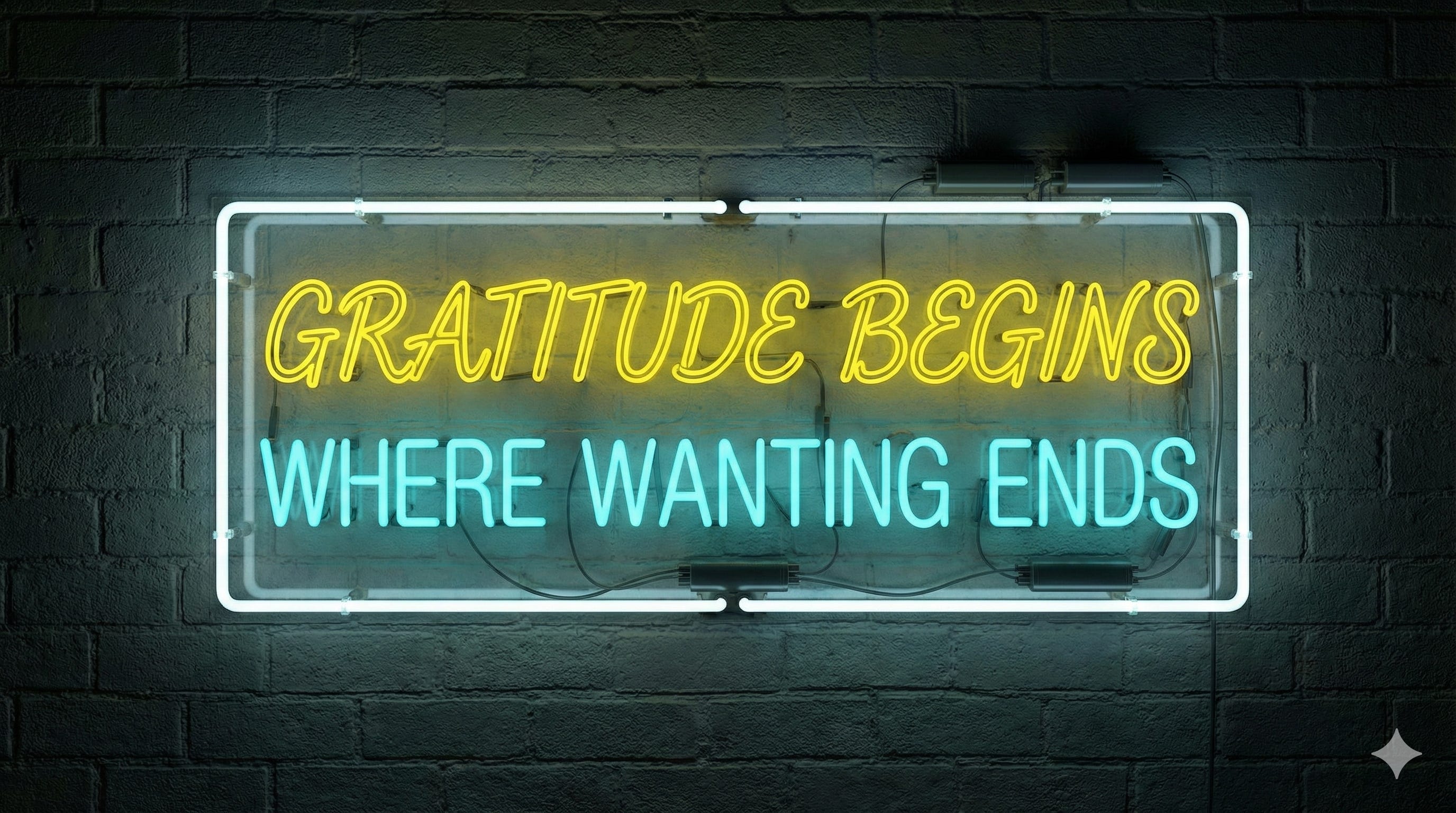
Just when wanting—that restless, never-satisfied hum in the background—finally quiets down.
This isn’t an anti-goals message. It’s an anti-always almost message.
Because many of us live our lives one step ahead of ourselves. We’re constantly leaning into the next thing:
I’ll be grateful when things slow down
I’ll feel better when I make more
I’ll relax when this season is over
I’ll enjoy it once I get through this week
The problem isn’t that those moments never arrive.
The problem is that wanting comes with us when they do.
Wanting is sneaky
Wanting is rarely loud. It doesn’t shout, “You’re unhappy!”
It whispers, “Just a little more.”
A little more money.
A little more recognition.
A little more certainty.
A little more ease.
Wanting convinces us that gratitude is a reward for later, something we earn after the checklist is complete. It keeps moving the finish line and calling it motivation.
But here’s the uncomfortable truth:
You can have a good life and still miss it entirely if wanting never shuts up long enough for gratitude to speak.
Gratitude isn’t a mood. It’s a decision.
We often treat gratitude like an emotional outcome. Something that shows up naturally once conditions improve.
But real gratitude is more muscular than that. It’s a choice to stop bargaining with the present.
Gratitude says:
This moment doesn’t have to be perfect to be enough.
I don’t need to upgrade my life to appreciate it.
I can want growth without wanting away from now.
That’s the distinction that matters.
There’s a huge difference between:
Wanting more from life
andWanting out of your current life
Gratitude begins when we stop confusing the two.
The cost of constant wanting
Wanting keeps us busy—but rarely fulfilled.
It turns joy into a transaction: I’ll feel good when…
It turns contentment into complacency’s evil twin.
It makes the present feel like a waiting room instead of a place to live.
And over time, it quietly teaches us that what we have is never quite enough—even when, objectively, it is.
That’s exhausting.
Not because life is hard (it often is), but because we’re carrying an unnecessary layer of dissatisfaction on top of it.
Ending wanting doesn’t mean settling
This is where people push back.
“If I stop wanting, won’t I lose my edge?”
“If I’m grateful now, won’t I stop improving?”
“If I accept things as they are, doesn’t that mean giving up?”
Nope.
Ending wanting doesn’t mean ending effort.
It means ending the internal argument with reality.
You can still:
Work toward better systems
Pursue meaningful goals
Build something new
Improve what’s not working
You just don’t have to hate the present version of your life while you do it.
Gratitude doesn’t kill ambition.
It grounds it.
What gratitude actually sounds like
Gratitude isn’t fireworks. It’s quieter than that.
It sounds like:
“This is hard, and I’m still thankful.”
“I don’t love everything about this season, but I can see what it’s giving me.”
“I don’t need this moment to be different to honor it.”
It’s noticing what’s already holding you up instead of only what’s missing.
The people who show up.
The body that mostly works.
The work that matters more than you admit.
The ordinary moments that don’t demand attention—but deserve it.
A small experiment
Here’s a gentle challenge—not a mindset overhaul, not a gratitude journal mandate.
Just this:
The next time you catch yourself thinking, “I’ll be happy when…”
Pause.
Finish the sentence differently.
“I’ll be happy now, even as I work toward that.”
You’re not denying the future.
You’re reclaiming the present.
Gratitude as a practice, not a personality trait
Some people talk about gratitude like it’s something you either have or don’t.
It’s not.
It’s a practice. A repeatable decision. A way of relating to your life instead of evaluating it.
And like any practice, it works best when things aren’t perfect—when wanting has the loudest voice and gratitude has to be chosen deliberately.
That’s when it matters most.
Phil’s Happiness Practice
Name the “enough” before naming the next goal.
Once a day, ask yourself: What’s already sufficient right now?
Not amazing. Not ideal. Just enough.
Say it out loud if you can.
Because gratitude doesn’t start when your life changes.
Gratitude begins when wanting ends.
So many great insights to reflect on - and a powerful way to reframe gratitude!